Important Links

Just Added: New link to Florida AG!

Monday, August 26, 2013

UNDERSTANDING YOUR NEW CAR WARRANTY

When you buy your new car your salesman will tell you that it has a “bumper to bumper” warranty. The most common coverage is for 3 years or 36,000 miles whichever should first occur. “Bumper to bumper” warranty sounds like it means that everything is covered. Unfortunately this is not the case. For example, your tires are not covered at all by the car manufacturer but under a separate warranty by the tire manufacturer.

It can be tedious, but the only way to completely understand your warranty is to actually read it. All warranties now are required to use the word “limited” unless there are absolutely zero exclusions and this, to the best of my knowledge, is never the case.

Some of the most common items that are mistakenly believed to be included in warranties are tires, rental car coverage, maintenance, and faded or damaged paint from various kinds of air contaminants.

I don’t know why all car manufacturers choose to exclude tires from their “bumper to bumper” warranties. After all, they choose the tire manufacturer just like they choose the manufacturer of other components on your car which they don’t manufacture themselves like the sound systems. The owner of a car has an established relationship with the service department of the dealership because she is bringing her car back every 5,000 miles or so for factory recommended maintenance. In most cases, she doesn’t even know who the tire dealer is. It would be far more customer friendly for the manufacturer to allow her dealer to handle warranty claims on tires. My suggestion is to ask your dealer’s service advisor or service manager to “broker” the warranty claim on your tires on your behalf. The dealership is more likely to have an established relation ship with a tire store and they can be your advocate.

New car warranties virtually never provide for a free rental car unless the vehicle must be tied up overnight for repairs. All too often, car salesman will promise you a “free loaner” anytime your car is in for service. Verify this with the service department before you rely upon it. There are extended service contracts which you can buy in addition to your new car warranty which will provide rental car coverage.

A new car warranty covers only “repairs” not maintenance items. A very common request is that a front end alignment be performed under warranty. Your alignment should have been checked before your car was delivered. If your car goes out of alignment after delivery, it is usually considered owner’s maintenance. Brakes are another item often misunderstood as being covered under warranty. Brake wear is almost always a maintenance item. Only a mechanical defect in your brakes is covered under warranty.

Faded or pitted paint can be from defective or improperly applied paint or from external causes like industrial fallout or foreign substances sprayed in the air (crop dusters or insect control airplanes). Of course there can be a good argument made that paint should have resistance to a certain amount of air pollution. This type of claim may require the inspection by a factory representative to determine the cause. From my experience, certain colors of paint seem to have more problems than others. Red and white come to mind. Ask the factory service representative if they have experience problems with your particular color. Stand your ground if you feel that the factory should stand good for faded or pitted paint. Get a second opinion from your insurance adjustor. You may even have an insurance claim. If you have your car washed and waxed regularly and keep it garaged it is highly unlikely that you will ever have a paint problem.

The manufacturer’s representative can authorize repairs to your car when it is out of warranty. This is called goodwill. Oftentimes the service manager of the dealership can also authorize goodwill repairs. This is a subjective ruling and depends on how close to being under factory warranty you are, how regularly you maintained the vehicle according to factory recommendations, how many cars of this make you have bought, and how you present your request. A car that is out of warranty by just a few miles or weeks can usually be covered under goodwill. If you maintained your vehicle regularly with your dealer and have bought several cars from this dealer, the further out of warranty you can expect goodwill repairs. Presenting your case in a positive, courteous manner helps a lot. Service managers and factory representatives have high pressure jobs and are often confronted by loud, rude, demanding customers. Your claim may be absolutely legitimate, but your chances of success are enhanced by being nice.

Some manufacturers offer longer warranties than others. The amount of time and number of miles that a vehicle is covered is important, but the quality of the vehicle is more important. Sometimes manufacturers will increase their warranty coverage to sell more cars because the quality of their cars is in question. Quality trumps length of warranty and I would always advise buying the higher quality rather than the one with the longest warranty.


Monday, August 19, 2013

Earl Stewart, the Consumer Advocate. Earl Stewart, the Car Dealer


For many years, I’ve worn two hats, one as a Toyota dealer and the other as an advocate for car buyers and owners of all brands. 
I take stringent measures to separate the two. As a consumer advocate for all car owners, I know that about 8 ½ out of 10 of all cars on the road are not Toyotas. Coming across as a Toyota dealer would appear to be self-serving and would cause me to lose all credibility and objectivity to the vast majority of car owners. Likewise, it would be unseemly for me, wearing my Toyota dealer hat, to remind my prospective customers that the Chevrolet Impala was rated higher than the Toyota Camry by Consumer Reports.
In my role as consumer advocate, I’ve written a book, Confessions of a Recovering Car Dealer, write a blog,  www.EarlStewartOnCars.com, tweet on @earloncars, post videos at www.YouTube.com/EarlOnCars, and write a column for the Hometown News. I also host “Earl Stewart on Cars”, a weekly radio show on WSVU, with my wife, Nancy. It’s a live call-in talk show that attracts one of the largest audiences in that time slot and car owners of all makes call me for advice and with their comments. I speak publicly all over South Florida at Chambers of Commerce, Rotary and Kiwanis Clubs, churches and synagogues, condo associations, public libraries and any other organization that asks me to speak. I’m proud to say that I’ve been invited to speak at the annual installation banquet meeting of the famous 82nd Airborne Division this December 8. I’ve been interviewed and quoted often by the national media including CNN, Fox, ABC, NBC, CBS, the Wall Street Journal, USA Today, NY Times, Automotive News, US News and World Report, Fortune Forbes, and the Associated Press. I’ve lobbied for better laws and enforcement of existing laws with Florida politicians and I testified before the Florida Senate Commerce Committee in an effort to outlaw the dealer fee. I also work with the Florida Automobile Dealers Association, FADA, in efforts to create an enforceable code of ethics that can improve the sales practices, advertising and the image of Florida car dealers. 
As a consumer advocate, to be totally objective, I cannot exclude Toyota dealers, the Toyota distributor (Southeast Toyota), or Toyota Motor Sales/Toyota Motor Corp. from criticism. How would it look for me to point out problems with only Honda, GM, Ford, Chrysler, and other non-Toyota dealers and manufacturers? When a Toyota dealer runs an illegal or unethical ad, it’s my duty to point this out to him and the public, just like I would a Honda or Ford dealer.
As you might surmise, I get a lot of heat from many car dealers. Incredibly, many accuse of me of being the reason they have such a bad image. The latest Gallup Annual poll again ranked car dealers last in ethics and integrity among all professions. Car dealerships also receive the greatest number of complaints among all retail businesses. Car dealers want to shoot me, the messenger, rather than look in the mirror.
Whereas you shouldn’t be surprised that other car dealers don’t like my role as consumer advocate, you might be surprised to know that Toyota doesn’t like it either. Toyota created a contractual document several years ago entitled the Toyota Dealer Ad Covenant, TDAC. The primary motivation for this document which all Toyota dealers must sign and agree to was to keep dealer advertising on the “up and up”. But there’s also language in the TDAC which prevents one Toyota dealer from being critical of another. It makes no difference whether the criticism is true and factual or not. The rationale behind this rule is that Toyota does not want its dealers to “damage Toyota’s brand”.
This is what I have a problem understanding. The Toyota brand is based on the quality of the cars they build and the positive perception of the Toyota manufacturer as a company that shows care, concern, empathy and integrity toward their own employees and their car owners. The Toyota brand ranking has always been very high. It slumped slightly after the sudden acceleration recall, but has currently risen back to #1 among all auto manufacturers.
The public sees the Toyota brand as separate and apart from the dealer brand. The brand of “John Smith Toyota”, the dealer, is based on how he treats his customers, how he advertises, and how ethically and honestly he sells and services Toyotas. Unfortunately, Toyota dealers’ brand image has been ranked consistently below average by JD Powers’ surveys of all other makes for many years, while Toyota, the manufacturer’s brand has always been very high. When a Toyota dealer damages his dealership brand, Toyota buyers give their business to the dealers with the better reputation. This is the way the free market place is supposed to operate and is what competition is all about. By “keeping quiet” about problems that Toyota dealers have, one prolongs the process of correction. In their advertising, all competing retailers compare their strong points to their completion. It’s survival of the fittest in the marketplace. There is very little, if any, correlation between Toyota’s brand and Toyota dealers’ brand; If there were, how could Toyota’s brand remain the highest and Toyota dealers’ brand remain near the lowest for so many years?
Toyota dealers compete against each other to a greater extent than they compete against other makes. Car buyers usually make up their mind which make they want to buy before they select their dealer. Their next step is to choose the dealer that they can most trust to give them a good price and treat them with courtesy, respect and integrity. For all Toyota dealers to be contractually forbidden to speak even the truth in criticism of another Toyota dealer seems almost like a restraint of trade. The car consumer should be entitled to all of the facts about the advertising and sales practices of those retailers that they buy from. Toyota dealers know more about this subject than anybody else. A Toyota dealer can tell you that the Honda dealer is using bait and switch advertising but he can’t say that about his Toyota competitor. But, with that said, I signed the TDAC and I will honor my commitment.
Unfortunately, there’s been some conversation recently about gagging the “other Earl Stewart”, Earl Stewart, the consumer advocate. It’s been suggested to me that I may be in violation of the Toyota Dealer Ad Covenant if I post a YouTube video of another Toyota dealer’s unethical TV ad on www.YouTube.com/EarlOnCars, a website that Earl Stewart the consumer advocate uses to expose illegal and unethical advertising by car dealers of all makes, including Toyota. Toyota is the largest seller of new cars in this market and for me to exclude them from criticism would come across as wrong and self-serving.
I didn’t forfeit my first amendment rights when I became a Toyota dealer. I remain a U.S. citizen and retain my rights of freedom speech as an individual and as a member of the press (my book, radio show, blog, and Hometown News column). I have to draw a line in the sand if anyone tries to take away my constitutional rights.


Monday, August 12, 2013

Dealers First in Most Consumer Complaints

Car Dealers Strike Again!
 It pained me, but did not surprise me, to read that automobile-related complaints once again topped the list of consumer concerns (Automobile-related complaints top the complaints list once again – Aug. 12, Susan Salisbury).  Sadly, automotive sales people are also ranked among the lowest as shown in this latest annual Gallup poll…

So, as a car dealer who has literally written the book about how to avoid getting ripped off when buying or servicing you car, I would like my readers of the top 10 things NOT to do:

 (1) Don’t believe automotive ads. Often the extremely low price or discounts apply to only one car or to a very select group that you won’t fit in.  It is best to just ignore these ads.

(2) Never buy a car on impulse on the first day you start shopping. There is something about a new car that excites people and appeals to them on an emotional level. Go home and think about it this major purchase.. Research the model of car you looked at and the price on the Internet. You should take at least a week or two in the decision making process before you buy a car.

(3) Don’t trade your old car in to the dealer you buy from without shopping its value.. The dealer can make it appear that he is giving you a lot of money for your trade by taking some of the high markup on the new car and showing it as part of the appraisal value. Check Kelly Blue Book (kbb.com) and Edumnds.com on the Internet. Get at least 3 bids from other dealers of the same make for your trade. Make the purchase of the new car and the sale of your trade two separate transactions.

(4) Don’t use the dealer’s financing without checking with your bank or credit union. Shop for the best price on your financing just like you shop for the best price on your trade-in and the best price on new your car.  Oftentimes credit unions, which you don’t have to be a member of, have the best rates.

(5) Don’t believe it when they say “This low price is good today only”. This is one of the favorite ruses used by car sales people and dealers. In 99% of the cases, you can buy that car for the same or an even lower price later. The only time that you can’t is when factory incentives expire on a certain date, typically at the end of the month. If that is the claim, demand to see the written factory incentive by the manufacturer.

(6) Don’t agree to “Make me a written offer with a deposit and I will submit it to my manager”. This is to get you psychologically engaged in the buying process. Once you have signed a buyer’s order and written out a check, you will remain in the dealership for a while and are more likely to buy. The salesman knows that. Insist on getting their best price on the car you have selected. You should never make the first offer. Once you have their price, compare it with at least 3 other prices from other dealers on the same make and model.

(7) Never agree to "take this new car home and see how you like it?". This is the famous “puppy dog” technique so named because once you take a puppy dog home overnight, who has the heart to return it the next day? You, your neighbors, and friends will see that shiny new car parked in your driveway. It sure looks good! How can you explain to anybody that you didn’t buy it?

(8) Don’t commit to “buy the car if you can get my monthly payments below $___.__” Most of us tend to think in terms of our monthly budgets. We might feel that we can afford a new car as long as it costs us less than $350 per month, but there is a big difference between $350 per month for 36 months and $350 per month for 72 months. I recommend that you finance a car for no more than 42 months, preferably 36.

(9) Don’t believe “You have my word on that.” Be absolutely sure that every promise or commitment made to you by your sales person is in writing and signed by a manager. No exceptions!

(10) Don’t accept that “All dealers charge a dealer fee and we can’t remove it from the invoice.” In fact, all dealers do not charge a dealer fee. I don’t. But unfortunately most do charge this “gotcha” ranging from $495 to $1,000. It is true that Florida law (which should prohibit dealer fees entirely) requires that the dealer fee appear on all invoices. If you charge just one customer a dealer fee, you must charge everybody. The state legislators, in their infinite wisdom, decided if a car dealer is going to take advantage of even one buyer, he must take advantage of all of the buyers….never discriminate. But the loophole in this stupid law is for you to demand that the dealer reduce the price of the car by the amount of the dealer fee, making it a wash.

All of this information and much more is contained in my book, “Confessions of a Recovering Car Dealer.”  I donate 100% of the sales of the book to charity as I make my living selling cars, not books.  Many local groups have used this as a fundraiser, by having me speak at their meeting and receiving all of the proceeds from the books purchased that day by their members and guests. You can purchase my book on www.Amazon.com.


I know I will never win a popularity contest among other car dealers, but I am ashamed of the ethics of our industry and am dedicated to doing everything I can to change it.

Monday, August 05, 2013

Caveat Emptor and Car Dealers: You Can Fool Some People All the Time

Almost everyone has read Abraham Lincoln’s popular saying, “You can fool some of the people all of the time, and all of the people some of the time, but you can’t fool all of the people all of the time.” I think Abe meant this to be a positive assertion that government may get away with deceiving us for a while, but in the long run, truth justice and the American way will prevail…and I think he was right.

 However, it doesn’t work that way with unethical car dealers and car buyers. It always has been “caveat emptor”, or “buyer beware when it comes to buying or servicing a car. Unfortunately for a buyer to “beware” he must be “aware”…that is to say educated, mature, sophisticated and experienced. This excludes a very large segment of our population including the very young, the very old, the uneducated, those with low I.Q.’s and those not proficient in the English language. Is this one reason why our regulators and elected politicians don’t seem to care or take action with respect to the rampant unfair and deceptive sales practices of a large number of Florida car dealers? Most elected officials and regulators are lawyers and are highly educated and sophisticated. They don’t have a problem buying or servicing a car. In fact, the car dealer that tries to take advantage of a lawyer, regulator, or politician is asking for trouble.

 I’ve been writing this column/blog and broadcasting my radio show, Earl Stewart on Cars, for about eight years. I sometimes feel that I’m “preaching to the choir” when it comes to advising people how to avoid getting ripped off by a car dealer. You, my readers and listeners, largely fall into the category of the educated and sophisticated, “aware” buyer. Most of you aren’t taken advantage of when you buy or service your car because you won’t allow it. Unfortunately, there are enough uneducated, naive, and otherwise vulnerable consumers to feed those unethical car dealers who prey on the defenseless among us. All you have to do is read some of the car ads in the Saturday (the biggest selling day for most car dealers) auto classifieds. To the educated, sophisticated buyer, these ads are actually funny if you can forget the fact that so many fall prey to them and are taken advantage of by the dealers. For example, it’s hard for you or me to believe that anybody would respond to an advertisement without reading the fine print. Many dealers today are advertising prices that, when you read the fine print, are understated by many thousands of dollars. When you or I see a dealer stating that the car price is plus “freight”, we are educated enough to understand that the law requires that the freight cost be already included in the price. A shrewd buyer knows that “dealer list” is not the same thing as MSRP and that a large discount from “dealer list” means absolutely nothing. We know that the “lowest price guarantee’ is worthless if the dealer reserves the right to buy the car from the other dealer that offers a lower price.

 There are those who argue that all buyers have the responsibility to guard against unethical sellers, to take care of themselves. In fact, that’s the literal translation of the Latin legal term “caveat emptor”…let the buyer beware. That’s sounds good, but what about the elderly widow whose husband recently died and who never had to make a the decision on a major purchase in her entire life? What about the young person just out of school with no experience in the real world? How about the immigrant who struggles with English? Should we be concerned about our underprivileged classes who often drop out of school because they have to go to work to support themselves or their family? You and I know lots of good people who, for one reason or another, simply can’t cope with a slick car or service salesman.

 My bottom line is this, since we can’t rely on our regulators and politicians to protect those who “can be fooled all the time”, maybe we owe it to society to protect these folks. If you know someone who is thinking about buying a car or has a service problem with her car and you feel she may not have the ability to fend for herself with the car dealer, offer your support. If you’re one of the people who needs support, ask someone who can go “toe to toe” with a car dealer to come with you when you are car shopping. By the way, nobody, sophisticated or not, should car shop alone. Two heads are always better than one and it’s always a good idea to have a witness to what was said during a negotiation. And, of course, if you don’t have the time to help a person or you’re that person, you can always call me…I’m always here for you.


Monday, July 29, 2013

TOP 10 WAYS TO GET SHAFTED BY A CAR DEALER

(1)   Believe the newspaper and TV ads. It never ceases to amaze me how outrageous and unbelievable the car dealers’ claims are. Just when I think that they can’t get any worse, I see one that tops them all. Last month, one dealer was advertising in the newspaper and TV that if you bought one vehicle from him you got a second for nothing. The “facts and fine print” would reveal that the first vehicle was a very expensive one with a huge markup of over $6,000 and the second vehicle was only the “use” of one for two years... a lease. My father always said, “If it sounds too good to be true, it probably isn’t”. Astoundingly, the general manager of this dealership had the gall to say on TV, “This is not a gimmick”!

(2)   Buy a car on impulse on the first day you start shopping. Can you believe that this is the way most people buy cars? It truly is. There is something about a new car that excites people and appeals to them on an emotional level. People let their feelings short circuit their logical thought processes. Overcome that emotion that tells you that you must drive home that shiny new car right now. Go home and think about it. Talk it over with your spouse and friends. Research the model of car you looked at and the price on the Internet. Always drive the car you chose before you sign any papers. You should take at least a week or two in the decision making process before you buy a car.

(3)   Trade your old car in to the dealer you buy from without shopping its value. Most people have no idea what their trade-in is worth when they come in to buy a new car. They rely entirely on the appraisal by the selling dealer. The dealer can make it appear that he is giving you a lot of money for your trade by taking some of the high markup on the new car and showing it as part of the appraisal value. Check Kelly Blue Book (kbb.com) andEdumnds.com on the Internet. Get at least 3 bids from other dealers of the same make for your trade. Make the purchase of the new car and the sale of your trade two separate transactions. Remember that you do get a sales tax break by trading in your car to the dealer you buy from.

(4)   Use the dealer’s financing without checking with your bank or credit union. Shop for the best price on your financing just like you shop for the best price on your trade-in and the best price on new your car.

(5)   Believe this, “This low price is good today only”. This is one of the favorite ruses used by car sales people and dealers. In 99% of the cases, you can buy that car for the same or an even lower price later. The only time that you can’t is when factory incentives expire on a certain date, typically at the end of the month. If that is the claim, demand to see the written factory incentive by the manufacturer.

(6)   Fall for this, “Make me a written offer with a deposit and I will submit it to my manager”. This is S.O.P at most car dealerships. This is to get you psychologically engaged in the buying process. Once you have signed a buyer’s order and written out a check, you will remain in the dealership for a while and are more likely to buy. The salesman knows that. Insist on getting their best price on the car you have selected. You should never make the first offer. Once you have their price, compare it with at least 3 other prices from other dealers on the same make and model.

(7)   Follow this advice, “Take this new car home and see how you like it.” This is the famous “puppy dog” technique so named because once you take a puppy dog home overnight, who has the heart to return it the next day? You, your neighbors, and friends will see that shiny new car parked in your driveway. It sure looks good! How can you explain to anybody that you didn’t buy it?

(8)   Agree to this, “I’ll buy the car if you can get my monthly payments below $___.__”Most of us tend to think in terms of our monthly budgets. We might feel that we can afford a new car as long as it costs us less than $350 per month, but there is a big difference between $350 per month for 36 months and $350 per month for 72 months. I recommend that you finance a car for no more than 42 months, preferably 36.

(9)   Believe the salesman when he says, “You have my word on that.” Be absolutely sure that every promise or commitment made to you by your sales person is in writing and signed by a manager. That salesman may not work there when you have occasion to ask for that “free loaner car” that he promised you anytime you bring your car in for service.

(10)                       Fall for this, “All dealers charge a dealer fee and we can’t remove it from the invoice.” In fact, all dealers do not charge a dealer fee. I don’t. But unfortunately most do charge this “gotcha” ranging from $495 to $1,000. It is true that Florida law (which should prohibit dealer fees entirely) requires that the dealer fee appear on all invoices. If you charge just one customer a dealer fee, you must charge everybody. The state legislators, in their infinite wisdom, decided if a car dealer is going to take advantage of even one buyer, he must take advantage of all of the buyers….never discriminate. But the loophole in this stupid law is for you to demand that the dealer reduce the price of the car by the amount of the dealer fee, making it a wash.

Monday, July 22, 2013

Holdback or Holdup?

Back in 1968 when I first went into the retail car business with my father, I can remember asking him, “What is holdback?” I was learning the business and had been studying the invoices on new Pontiacs that General Motors sent us when they shipped a new car that we had ordered. We had to pay the invoice immediately when it was issued, sometimes even before the car arrived at our dealership. Actually, in most cases, it was our bank or GMAC who paid GM and we borrowed the money from them to pay for the car.  

My father’s answer to my question about holdback was that it was an increase in the amount of the invoice that we paid General Motors which was not really part of the price of the car. It was just an extra amount added to the real price of the car and included in the invoice. At that time it was 2% of the MSRP [suggested retail], so if a new Pontiac Bonneville had an MSRP of $10,000 and a true cost of $9,000, the factory invoice would be $9,200. I asked my father, “When do we get the $200 back?” He said, “At the end of the year”. I asked him if they paid us interest on our money and I can remember him laughing loudly and saying no.

Of course my next question was why they do that. He told me that the reason they gave him was to be help dealers sell their cars for more money so that they didn’t go broke. He said that because they didn’t get their holdback money for such a long period of time, they began to think of their invoice as being the actual cost of the car. General Motors felt that many dealers were such poor businessmen that they might sell their cars so cheaply that they would go out of business. Now, because GM was kind enough to hold back hundreds of thousands of dollars of the dealers’ money [and pay them no interest on it] but return the money to them once a year, they could help the dealers make a bigger profit and maintain adequate working capital.

At that time I thought this was the biggest bunch of boloney I had ever heard and I was sure that this was a scheme by the manufacturers to keep a free float of millions of dollars of their dealers’ money under the guise of helping the dealers. I asked my father why the dealers didn’t strongly object to this and he said that most dealers actually “liked” the idea of holdback. When I heard that, I thought that maybe GM and the manufacturers were right about the dealers not being smart enough to sell their cars for a reasonable profit.

It took me a few more years in the business before I understood what was really going on with holdback. It was a “no brainer” as to why the manufacturers liked it but at last I understood its attraction to us dealers. Because we had to pay an extra amount over the true price of the car and not see that money for up to a year, we began to think of the invoice as the true price, even though it was actually inflated by hundreds of dollars. Because all manufacturers added holdback to all dealers invoices, the net effect was to raise the price of all cars to all buyers by the amount of this holdback. I know this is a dirty word, but it is price fixing on the grandest of scales. This might have been something that Henry Ford, Alfred Sloan, and Walter Chrysler concocted while playing golf at Bloomfield Hills Country Club outside of Detroit.

Another neat thing about holdback for us dealers is being able to tell our customers that we are only charging them “X dollars” over invoice. Or, we can tell them that we will sell them this car at invoice with no profit to us at all! [There’s a sucker born every minute] Dealers often have “invoice sales” with copies of the invoice pasted on the car windows. Who doesn’t believe that an invoice is the cost of the car? The truth is in the semantic skullduggery …”Mr. Customer, I solemnly swear to you that this the exact price that I paid the factory for this car. In fact, here’s a copy of the invoice.” That’s what the dealer “paid” the factory all right, but it’s not what the he paid the factory after he got his holdback check in the mail.

You might be thinking, so we’re talking about $200 more or less on a $10,000 car. Who cares? Don’t forget, that was over 40 years ago. Holdbacks have expanded considerably and now instead of several hundred dollars we’re talking several thousand.  Also, dealers no longer have to wait a year to get their hold back money back. Now they get it back monthly. Manufacturers even changed the names of these monies they hold back. These are innocuous names so that, if you see them on the invoice, you will have no suspicion…names like floorplan assistance, advertising, PDI, Administrative or DAP. Of course there are also cash rebates to dealers that don’t even show on the invoice. I estimate the average car invoice today includes $3,000 to $4,000 in hidden holdbacks to the dealer. Holdbacks are also applied to factory or distributor accessories like “protection packages” [wax, undercoat, window etch, roadside assistance], floor mats, window tint, etc.

The bottom line is that you don’t rely on the dealer’s factory invoice to determine the price you are willing to pay for a car. And be especially suspicions when the dealer quotes you a price of “X dollars over invoice” or actually shows you the invoice. You’ve heard the old joke, “How can you tell when a politician is lying?” Answer: When his lips are moving. “How can you tell when a car dealer is lying?” Answer: When he shows you the invoice.


Monday, July 15, 2013

Cadillac Service and Repairs at Chevy Prices


This article is directed at luxury car owners. If you drive an Acura, Cadillac, Lexus, Lincoln, or Infiniti and you’re taking your car to the dealer of that same make you drive, you’re paying as much as twice as much as you have to for maintenance and repairs.

Most people know that General Motors manufacturers Cadillac as well as Buick, Chevrolet, and GMC trucks. Most of the models of each of these makes share in the engineering and design. This also holds true for Acura and Honda, Lexus and Toyota, Lincoln and Ford, and Infiniti and Nissan. Some models are almost totally identical “under the skin”. The manufacturers make their luxury version look fancier and add luxury options and accessories, but the underneath it all, they are mostly the same vehicles.

The reason that many people don’t know that their Infiniti is built by Nissan and Lexus is built by Toyota is “marketing”. The manufacturers don’t want you to know that that the Lexus ES you’re driving is really a Toyota Camry, “all dolled up” or that the Acura ILX is really a fancy Honda Civic. Volkswagen, Mazda and Hyundai all made big marketing mistakes when they introduced their luxury models, Phaeton, Amati, and Equus. The VW Phaeton which cost over $100,000 bombed badly and is no longer sold in the USA. The Mazda Amati was announced in the early 90’s but Mazda canceled their plans when they suddenly “saw the light”.  The Hyundai Equus, over $60,000, is not selling well either and I predict it won’t be able to compete in the USA luxury car market either.  

The reason these three models failed is that Volkswagen, Mazda and Hyundai made the fatal marketing mistake in expecting a luxury car buyer to spend $100,000+ for a car sold in a Volkswagen dealership or $60,000+ for one sold in a Hyundai dealership. To compete with established luxury brands like Mercedes and BMW, manufacturers must offer buyers a car that they feel confident is not only a luxury car, but perceived by their friends, neighbors, relatives, and business associates to be a luxury car. When a luxury owner is leaving a fancy restaurant or his country club and gives his ticket to the valet, he doesn’t want to be asking for a Volkswagen or Hyundai, albeit the most expensive one. When he brings his car in for service, he wants to mingle with other luxury car owners with all of the luxury amenities offered…it’s like first class vs. coach. I know Lexus dealers who offer massages and manicures to their service customers. JM Lexus, the world’s largest Lexus dealer, has a putting green on their roof for their waiting service customers.

Luxury owners expect to pay more for service and luxury car dealers are happy to accommodate them. If you’re willing to pay twice as much for an oil change because you can play golf while you wait or have a manicure, that’s up to you. But you can save a whole lot of money and have technicians that are totally qualified to maintain your luxury car by bringing it to the same manufacturer’s dealer for the lower price make…Acura to Honda, Cadillac to Chevrolet, Lexus to Toyota, Lincoln to Ford, and Infiniti to Nissan. 

There is one caveat and that is the manufacturers require that you have your factory warranty repairs done by the luxury car dealer. You may also experience some problem with parts availability. Although most parts are the same, there are some parts like a cabin air filter which the dealer may have to buy from the luxury car dealer. My suggestion would be to make an appointment for your service in advance and tell the Honda dealer what you would like done. He then can be sure to already have all the necessary parts on hand when you arrive. You will be shocked at how much money you can save and, measured over the total time you own your car, this can amount to thousands of dollars.


I know that a lot of luxury car owners will read this and continue to bring their luxury car to the luxury car dealer just like there are diamond jewelry buyers who will pay Tiffany’s twice as much for the exact same caret, color, and clarity diamond as Costco sells, when the only tangible difference is the “little blue box”. Brand image is a powerful marketing tool. 

Tuesday, July 09, 2013

Always Get It in Writing

Many readers of this column call me for advice and to tell me horror stories about their dealing with unethical car dealers. Of course it would be much better had these readers called me before they bought the car.

I have written hundreds of columns for Hometown News and given advice on a variety of subjects which should make your car buying, or servicing, experience safer and more pleasant. There is one piece of advice which, if strictly followed, would eliminate over 90% of the problems car buyers have with car dealers. That advice is “always insist that all promises and commitments made by the car sales person or sales manager are put in writing”. The written commitments should be signed by the sales person/manager and you and you should retain a copy.

These are just some examples of promises made by sales people and sales managers that  were not kept: (1) Sign the contract, drive the car home, and if you change your mind within three days you can bring the car back and we will refund all of your money. [When the customer brought the car back, the salesman claimed he never said any such thing] (2) After signing a 36 month lease, the salesman assured this customer that, if she got tired of this car in less than 36 months, she could just bring it back anytime. [Of course the leasing company didn’t agree with the salesman on this]. A customer was promised that she would be able to get free loaner cars anytime she brought her car in for service. [The service department didn’t know anything about this. They don’t offer free loaners]. The business manager, also known as the F&I manager, told the customer that the warranty/extended service contract he was selling her covered 100% of anything that went wrong with her car. [When she came in for a brake job, the service manager showed her the fine print in the warranty contract that said maintenance items were not covered]. The salesman told the customer not to trade his car in on the new car because he owed way more on the car than it was worth. He told him to just let the bank take her old car back and because she was making her payments on time on her new car it wouldn’t harm her credit rating. [I don’t think this requires any explanation]. Customers are promised that they can bring their car back after they buy it and have CD players, leather, running boards, and floor mats, and other accessories installed as part of the deal. When they come back, none of the managers knows about this and the salesman can’t be found or doesn’t “remember”. I could list dozens more of these anecdotes.

You have very little chance when it’s your word against the salesman’s or sales manager’s. You have even less of a chance if it’s two against one. Do not be timid about asking that everything you are promised is put into writing. If the salesman objects to this or hesitates, you have to ask yourself why? Another reason for having all promises committed to writing is that the salesman or sales manager may not work at that dealership anymore when you come back to collect on his promise. He may have actually been sincere, but now he’s gone. Will his replacement believe you?

It’s a good idea to carry a note pad with you when you are negotiating to buy a car. I wrote a previous column entitled “Never Go Car Shopping Alone”. When you have an ally with you, she can take notes while you are negotiating. Also, if you do forget to commit a promise to writing, your credibility is enhanced when it’s two against one instead of “he said/she said”. When you are signing the final documents, you have your complete set of notes detailing promises, assurances, and commitments by the salesman. Then, all you have to do is have these signed by both parties and be sure that you get a copy.

Saturday, July 06, 2013

Earl Stewart on Cars: A Look at a Deceptive Dealer TV Ad: Napelton Kia

In this segment of the Earl Stewart on Cars radio program, Earl discusses dissects a deceptive television ad from Napelton Kia, and talks about what happened when his mystery shopper attempted to purchase the sale priced vehicle.

Listen to Earl Stewart on Cars every Saturday, from 9am to 10am Eastern, on Seaview Radio, (seaviewradio.com), AM 960 and FM 95.9 & 106.9. You can phone in your car question during the show using the listener line at 1-877-960-9960.

Pick up a copy of Earl's new book, "Confessions of a Recovering Car Dealer". Go to earlsbook.com or on Amazon http://www.amazon.com/Confessions-Recovering-Dealer-Earl-Stewart/dp/0985729511/ref=sr_sp-atf_title_1_1?ie=UTF8&qid=1373116154&sr=8-1&keywords=confessions+of+a+recovering+car+dealer All proceeds will go to charity.

You can also learn more at earlstewartoncars.com and twiiter.com/earloncars.

Monday, July 01, 2013

Should I Buy a Car or Have a Colonoscopy?

I wrote this column 6 years ago, but my doctor just told me I’m scheduled for another colonoscopy at the end of this year and it reminded me that, if I were you, I would probably rather do this than buy a car from a typical car dealer. J 

If you are over 55, you should have had a colonoscopy.  If you haven’t, call your doctor because this could save your life. It did mine, but that’s another story. I had another colonoscopy yesterday and I have to tell you that it’s a very unpleasant experience, mainly from the mental anguish anticipation and the discomfort of the preparation the previous day. I had a lot of time to think about my procedure and I started thinking about how this experience parallels that of buying a car. It’s something you must do and has a very good benefit, but you dread the process.  

This column, my 39th for Hometown News, has consisted mainly of suggestions and inside information that can make your new or used car buying experience less of a fearful occasion. Some of the titles/subjects are “Always Get an Out the Door Price”, “Bait and Switch Advertising”, “Beware of Deceptive Internet Car Pricing”, “Beware of Direct Mail Car Advertising”, “Buying a Car When You Have a Credit Problem”, “Eight Steps to Ensure You Are Buying the Best Car for the Best Price”, “List Price and MSRP Might Not Be the Same”, “Negotiating to Buy a Car”, “Open Letter to Florida Car Dealers” (I, II, III, and IV), “Shop Your Financing and Trade”, “Should I Buy My Car at the End of the Lease?”, “Should I Lease or Buy my Next Car?”, “Should I Pay Cash or Finance My Next Car?”, “Should I Trade in My Old Car or Sell it Myself”, “Tell Your Car Dealer to be Nice”, “The Right Used Car is a Better Buy than a New Car”, “Translating Misleading Car Ads”, “What is the True Cost of that New Car?”, “What to do if You Are Treated Badly by a Car Dealer”, “When is a Car Sale Not a Car Sale?”, and “The Internet Price is the Lowest Price for a New Car”.  

Almost every one of these articles originated from my customers’ and others’ experiences when buying cars from other car dealers. I get a lot of calls from people who have never bought a car from me. They call to tell me of their bad experience with another dealer and, when I get several calls on the same subject, I write a column on it. People often call me asking for advice or assistance after they have already bought, which is “closing the barn door after the horse is gone.” On more than one occasion I have called car dealers asking them to consider undoing a wrong they have caused one of their customers. I have to confess that I am “batting zero” on this effort. I won’t give up, however. I just made another call this afternoon on behalf of a customer whose installment sales contract, signed by her and the dealership had a higher interest rate than a second contract that the dealer sent to the lender. The customer told me she signed only one contract, the one she took home a copy of.  

One thing that amazes me about these weekly columns that I have been writing for almost a year is that no car dealer has ever called me to complain or for any other reason. I have not been sued either. I think that says something about the truth of my articles. I’m not a lawyer, but I do know that you can’t successfully sue somebody for libel or slander if they write or say the truth. I know of one car dealer who threatened to cancel her advertising in the PB Post because she thought it owned the Hometown News. I am puzzled why not one single dealer would call me just out of curiosity. I don’t have a secretary and I don’t screen any of my calls…nor do any of my employees. They do know how successful my dealership is and how fast my sales are growing. They know that I am selling a lot of their former customers. Many of these new customers tell me how they told the other dealers why they chose to take their business elsewhere. I believe that before too much longer we will see some changes in the way other car dealers do business even if they refuse to call me, as I have repeatedly invited them to do. Sooner or later they will understand that treating your customers with courtesy and integrity is just plain good business. 

Earl Stewart on Cars: Defeating the "Highball" and "Lowball"


In this segment of the Earl Stewart on Cars radio program, Earl explains "highball" and "lowball" sales tactics and how to defeat them using smart consumer practices.

Listen to Earl Stewart on Cars every Saturday, from 9am to 10am Eastern, on Seaview Radio, (seaviewradio.com), AM 960 and FM 95.9 & 106.9. You can phone in your car question during the show using the listener line at 1-877-960-9960.

Pick up a copy of Earl's new book, "Confessions of a Recovering Car Dealer". Go to earlsbook.com. All proceeds will go to charity.

You can also learn more at earlstewartoncars.com and facebook.com/EarlStewartToyota

Monday, June 24, 2013

Should You Finance Your Car With a Car Dealer or Bank?

As with most complicated issues, there’s no simple answer. The very fact that this question is complicated is exactly why you need to be very careful before you choose to finance the next car you purchase with the car dealer who sold it.

So, let me start by giving you a hard and fast rule. Never finance your car with the car dealer unless you have checked the interest rate and terms with at least two banks and/or credit unions. When you’ve completed the process of choosing the car you want to buy, the dealer who offers you the best price on that car, and the dealer who offers you the best price on your trade-in, you should be armed with quotes from at least two banks and/or credit unions on the lowest interest and best terms. Your own bank may even be the same bank that your dealer uses. If you have good credit, you can borrow the money directly from your bank for as little or even less than the rate the bank offers the car dealer. When you borrow money from the bank it’s called direct lending and when borrow through the dealer it’s called indirect lending. Just because the dealer says that he “does business” with your bank doesn’t mean that he’s giving you as good an interest rate that you can get from your bank; in fact, he’s probably not.

Did you know that the average car dealer makes more money on the car finance contract than he does on the sale of the car? A car dealer’s finance department is a separate profit center in a car dealership, just like the new car, used car, service, and parts departments. AutoNation, the largest retailer of cars in world, averages about $1,600 on finance contracts for every car they sell. This includes cars that they don’t finance because some buyers pay cash or finance through their banks or credit unions. If you factor those out, the average profit per car actually financed by the dealer can soar to well over $2,000 to $3,000 or higher. I’m often asked the question, “If I pay cash for my car can I get a better deal”? Counter intuitively, the answer is no! In fact, there’s a good chance you will end up paying more for your car if the dealer knows you’re a cash buyer because he knows he is forgoing his better opportunity to make money from that purchase.

The code word for interest rate profit for car dealers is “reserve”. Dealer reserve is what the banks kick back to the car dealer when they assign the finance contract that you sign to that bank. Dealers have reserve agreements with certain banks, including the manufacturers’ banking subsidiaries. Examples of manufacturer lenders are Honda Credit, Ally Bank (Chrysler and General Motors), and Toyota Financial Services. Manufacturer lenders are referred to as “captive lenders”.

The car dealer is, in effect, borrowing the money from his bank, marking up the interest rate as high as is allowed by the bank, usury laws, and you. The name for the markup is the “spread”. The dealer might be able to borrow money from a bank for 2.69% and the bank might allow him to mark it up to 4.69%, a “2 point spread”. Marking up 2.69% to 4.69% is a 75% markup above the dealer’s cost (dealer retention) from the bank. A customer with good credit, say a 740 Beacon score or better, could borrow the money directly from the bank at 2.69% if that customer knew to ask. A customer who doesn’t know, and assumes the dealer is trying to get him the lowest rate will pay the dealer an extra $1,004 profit if he finances $20,000 for 72 months. The dealer usually will sell various “products” which are added to the finance contract and included in the payments such as extended warranties, GAP, maintenance, road hazard insurance, emergency road assistance, etc. These products can add up to $1,000 or much more. With interest rates at historic lows, many people who haven’t financed a car in many years don’t know that, with good credit, interest rates on new car loans can go below 2%. If they financed their last car at 5% and are quoted 4.69% by the dealer, they might think that’s a very good rate when it’s really very high.

There are times when it definitely pays to finance with the dealer and the biggest one is when the dealer’s manufacturer captive lender offers special low interest rate incentives such as 0%. When you read an advertisement for 0% financing, be sure that the lender is the dealer’s manufacturer’s captive lender, like Honda Credit. If the dealer is offering 0% through a bank not affiliated with his manufacturer, it’s not a valid offer. The dealer is simply adding additional markup to the car he’s selling you so that he can “buy down” the real interest rate the bank is charging. When captive lenders offer 0%, be sure you ask if there is an alternative cash rebate. Typically the captive lender offers something like 0% financing for 60 months or a $1,000 cash rebate. You need to do the math to find out which is the better deal. This is calculated by knowing how much you can borrow the money for from your bank or credit union and how much you’re financing. Unfortunately it’s common for dealers to advertise the car price including the $1,000 rebate and also advertise 0% financing. In the fine print they say “no two offers can be combined”.

Today, the federal government is going after banks, including captive lenders, for discriminating against minorities by charging higher interest rate without regard to the customers’ credit scores. They should be going after the car dealers instead of the banks, since it’s the car dealers who raise the interest rates. But the car dealers are hiding behind a loophole which names the bank as the primary lender, even though the dealer decides the interest rate and signs the customer to the installment sales contract.  This is because the dealer immediately sells that contract to the bank. The federal government is saying that all customers with the same credit score should be offered the same interest rate. Since the dealer is the one who determines the interest rate, why isn’t he held responsible?


Monday, June 17, 2013

Modern Complex Accessories Make for Unsafe Driving

Ford Motor Company just announced that they are going back to “buttons and knobs” instead of their high tech touch-screen and voice recognition multimedia systems in their cars. They made this decision because of too many complaints, although, they said that the features were a motivation for customers to buy the car in the first place. This means that the high tech gadgets seemed like a great idea until you tried to use them while driving. They were too complicated, sometimes didn’t function the way the driver expected, and required too much focus which detracted from keeping their eyes on the road.

In case you haven’t noticed, technical advancements in cars are progressing at warp speed. We have far more computer power in a car today than in the rocket that took the first to the moon. Most of this is hidden under the hood and requires very little driver knowledge or participation. But car manufacturers have also started loading up the “cockpit” with high tech gadgetry like multimedia equipped with Bluetooth, touch-screens, and voice recognition. Your smart phone is automatically connected to your multimedia system when you start your car. Some cars have “micro radar” that detects cars approaching alongside in your blind spots or coming toward you as you back out of your parking spot. There’s even a camera mounted on the front of some cars that will tell you when you begin to move out of your lane and actually correct the steering wheel if you don’t hear the audio warning. This camera will sound a warning and automatically apply the brakes if you approach an object too fast.

To qualify for a driver’s license today, you have to learn all of the traffic rules and prove that you can drive a car on the road and park it. The driver’s test today is no different than it was 50 years ago when cars were far simpler to operate. Fifty years ago cars didn’t have cruise controls, navigation systems, front and rear video cameras, radar, Bluetooth, touch-screens, multiple warning lights and sounds, integration with smartphones, automatic braking and ability to keep the car tracking between the two white lines in the road.

Where we find ourselves today is on the verge of a driverless car. In fact, driverless cars are allowed on the road today and legal in several states including Florida.  Five or ten years from now when driverless cars become a reality, there will be virtually no accidents on the road. Computers are far smarter and coordinated than we and, even taking into consideration the occasional computer failure, they are safer. Computers don’t ever lose their focus. They don’t get mad at other drivers, look at pretty girls on the side of the road, drink too much, or fall asleep at the wheel. Car insurance premiums will go down drastically when driverless cars become a standard.

Until all the complicated high tech gadgetry on today’s car is completely taken over by the computer, we need to think about being sure humans are capable of safely focusing on their driving while they operate their navigation systems, touch-screens, Bluetooth, and multimedia sound systems integrated with their smart phone. Car buyers should be thoroughly trained on the operation on all of the high tech gear on their cars. They should be tested on its operation while demonstrating that they can drive safely at the same time they are operating it. A human being cannot focus on driving safely at the same time they are trying to figure out how to disconnect their iPhone from their Bluetooth when a call comes in that they want to keep private. It can be distracting just to change the station on a radio that has satellite, AM, FM, and interfaces with your smartphone. A driver should be so well trained that it’s almost reflex with no conscious thought required.

 When I’m using my navigation system, guided by the woman’s voice,  and I reach the point where I know the rest of the way and don’t require guidance, I can never remember how to “make her stop talking”. I get irritated with her reminding me to turn at the next intersection when I already know to do so, but I can’t remember the procedure to mute her out. I take my eyes off the road while I try to figure it out. I know I should pull over to the side to do this, but if it’s rush hour on I-95 this can also be dangerous.

When a person takes a driver’s test, he or she should have to prove that they can easily and quickly operate the cars’ high tech accessories while safely driving. When a person buys a car with new gadgetry, the dealer should be required to train that buyer in the fast, efficient operation of all accessories and the buyer should complete a test to demonstrate that they did in fact learn what was taught. If the test wasn’t passed, the particular accessories that the buyer couldn’t demonstrate competence in would be disabled until that time that they can demonstrate proficiency.  

Currently, all a car salesman does for a new buyer is give her or him an owner’s manual which nobody reads. Even if a buyer was inclined to study the owner’s manual, they are way too lengthy and written in a boring,  non-user friendly style. The navigation systems are so complex that they have their own owner’s manual at least a couple of inches thick.

Governor Rick Scott recently signed a bill into law making it illegal to text while driving. Actually, texting with voice recognition is no more unsafe than talking on a hands free cell phone while driving. If a driver can demonstrate that they can text safely while driving, they should be able to do so. But they should also be required to demonstrate that they can safely operate all other accessories on their car while driving safely. 

Monday, June 10, 2013

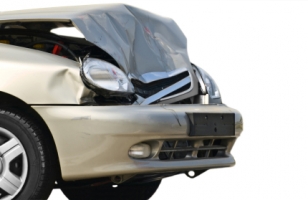
I WRECKED MY CAR…NOW WHAT?


The article below was written by Alan Napier, the manager of my body shop, for my Toyota customers. However, the advice Alan gives applies to any make of car.

This Is Supposed To Be Easy  

Dealing with your insurance company has never been as difficult as it is right now. 2008 was a disaster for most insurance companies. Falling revenues, catastrophic disasters, poor investments and last years financial meltdown led to losses for most major carriers. Why should you care? Because now that the horse is out, they’ve slammed the barn door. This means that they are utilizing more aftermarket, remanufactured and junk yard parts to repair your vehicle. It means that insurance companies are applying discounts to their estimates that were not there prior to the collapse of Wall Street. It means that they are not negotiating in good faith with your repair facility to bring your vehicle back to its pre-accident condition.

What Can I Do?     
              
Most importantly, insist that your damaged parts be replaced with new genuine Toyota replacement parts. Toyota only provides warranties on new OEM parts. If necessary, involve your agent. Remember, your agent works for you and should be your advocate when dealing with claims staff. 

Second, insist that the insurance appraiser explain the estimate they are providing to you. Many times the estimate will not come close to paying for all of the vehicle damages. It’s not a mistake when this occurs, but a calculated tactic. Many people don’t repair their vehicles and have no idea that their insurance company did not provide enough funds to repair the car properly. Point out any damage that the appraiser doesn’t acknowledge on the estimate and insist that it be added to the appraisal right away. Often the appraiser will tell you he has already written the check, so he cannot change the estimate until the vehicle is at a repair facility. This is not true. The appraiser is obligated to pay for all of the visible damage regardless of how many estimates and checks he has to write. As with any negotiation, be polite, but firm.

I Don’t Have Time for This!! Somebody Help Me!!

If you just really don’t want to deal with all of that, that’s where we come in. Your insurance company will advise you to repair at a shop that “works with us”. Translation: “They do what we tell them.” Earl Stewart Toyota will insist that your insurance company pay to repair your vehicle properly, per the manufacturers’ recommendations, to its pre-accident condition. Bring in your car, show us the related damages, sign a repair authorization, hand us the keys and you are done. It’s that easy. We take care of everything from that point. All we ask is that you support our efforts to negotiate with your insurance company. They will do everything from using scare tactics to telling outright falsehoods to save a few bucks. You trusted us to sell you a Toyota and maintain it to manufacturers’ standards, now trust us to repair your collision damaged vehicle to its pre-accident condition.